Can a Leicester Victorian Terrace Run on a Heat Pump?
Last reviewed: 2 October 2026
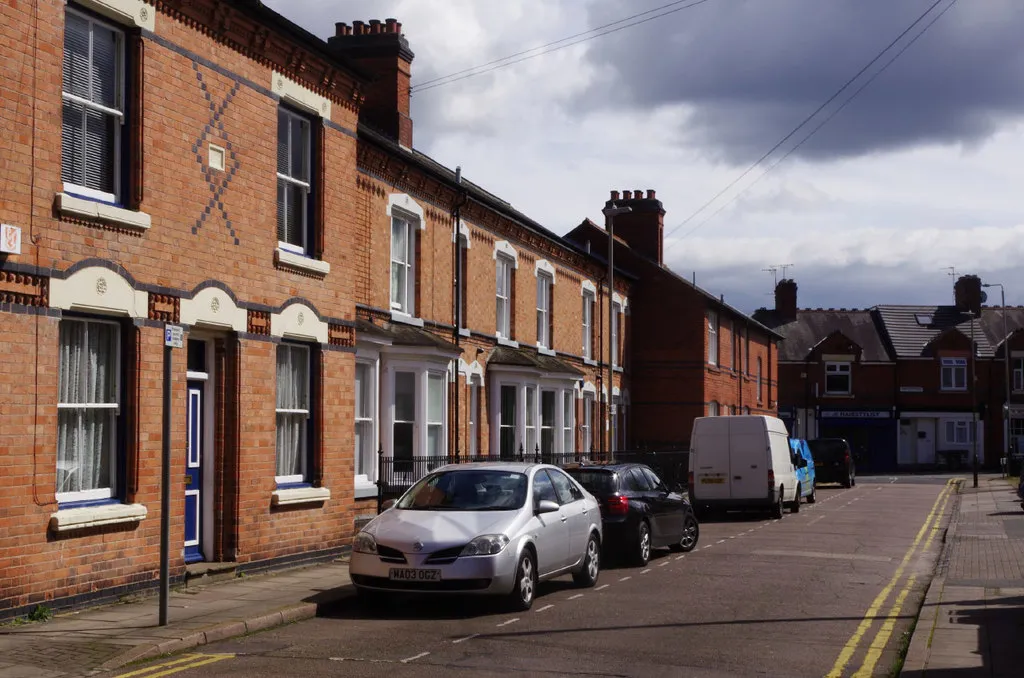
Leicester has tens of thousands of Victorian red-brick terraces. This guide walks through a typical conversion room by room, from the back yard to the front bay, and explains what makes these homes straightforward or tricky.
The short answer
Yes. A Victorian terrace is one of the most common homes to convert to a heat pump in Leicester. These houses are compact, share walls with neighbours on both sides (which cuts heat loss), and usually have a back yard with room for an outdoor unit. The main jobs are bigger radiators, a hot water cylinder, and careful siting.
A conversion, room by room
Take a typical three-bedroom red-brick terrace in Clarendon Park, Highfields or the West End: two storeys, front bay, back kitchen extension, solid nine-inch brick walls, a combi boiler.
The back yard
The outdoor unit goes here, usually against the rear wall of the kitchen extension or at the end of the yard. Neighbours are close, so the installer checks the noise at the nearest neighbouring window. It must be 37 dB(A) or less to stay within permitted development. Units that back onto the shared alley — the “jitty” — can work if you own the ground they stand on.
The kitchen
The combi boiler comes off the wall, freeing up a cupboard. Pipework from the outdoor unit enters here.
The front room with the bay
Usually the coldest room: big bay window, an outside wall, often a chimney breast. Its radiator almost always needs upgrading to a larger double-panel model or a pair of radiators.
The middle room
Shares party walls on both sides, so it loses less heat. The existing radiator may be fine.
Upstairs
The back bedroom over the kitchen extension has three outside walls and often needs a bigger radiator. The front bedroom may too. The cylinder — 150 to 210 litres — goes in the old airing cupboard if there is one, or in a new cupboard on the landing or in a bedroom alcove.
The cellar
Many Leicester terraces have a cellar. If yours is dry and accessible, it can be a good place for the cylinder and controls, freeing upstairs space.
Typical numbers for a Leicester terrace
| Two-bed terrace | Three-bed terrace with extension | |
|---|---|---|
| Heat loss on a cold day | 4–5 kW | 5–7 kW |
| Heat pump size | 5 kW | 6–7 kW |
| Radiator upgrades | 2–3 | 3–5 |
| Cylinder | 150 litres | 180–210 litres |
| Days on site | 3–4 | 4–5 |
The Stoneygate villa: a different job
Leicester’s larger Victorian and Edwardian homes — the villas of Stoneygate and Knighton — are a step up in scale. Three storeys, tall rooms, big windows and often a conservation area. Expect a larger unit (10–13 kW), more radiator upgrades, and a front-of-house ban on unit positions under conservation area rules. Large gardens make siting easier than in a terrace.
Things that make it harder
- Microbore pipework. Some terraces had heating installed in the 1970s or 80s using thin 8–10 mm pipes, which may not carry enough flow for a heat pump. Replacing some of it adds cost.
- No space for a cylinder. In the smallest two-up two-downs, the cylinder may need a new cupboard built.
- Draughts. Suspended timber floors, old sash windows and open chimneys all leak heat. Simple draught-proofing is cheap and helps.
- Leicester’s colder winters. The East Midlands is colder than the South West (the Sutton Bonington Met Office station averages a January overnight low of about 1.9°C). Correct sizing matters.
Hard water
Severn Trent’s water in Leicester is hard, typically around 220–280 mg/l of calcium carbonate. Old radiators and pipework are often full of sludge and scale. A good installer flushes the system, fits a magnetic filter and specifies a cylinder with a heat pump-rated coil.
Help with the cost
- Boiler Upgrade Scheme: £7,500 off for any eligible homeowner or landlord.
- Leicester City Council’s Warm Homes: Local Grant: potentially free insulation and heating for households with an income under £36,000 in homes rated EPC D to G. Many Victorian terraces have poor EPC ratings, so it’s worth checking.
Before you get quotes
Ask each installer:
- Will you calculate heat loss room by room?
- Which radiators need replacing?
- Where will the cylinder and outdoor unit go?
- Does the noise test pass at my neighbour’s window?
- Is any of my pipework microbore?
Related: insulation before a heat pump and planning permission in Leicester.
See what a heat pump would look like in your Leicester home
The mechanism is the same in every UK home; the design is specific to yours. Our team carries out a free in-home survey including a full room-by-room heat-loss calculation, identifies the system size and configuration that fits your property, and provides a written quote with the £7,500 BUS grant already deducted.
You'll see the actual figure you'd pay — not an estimate — and the projected efficiency for your specific install.