What's an Air Source Heat Pump? Myths and Facts for Leicester Households
Last reviewed: 2 October 2026
A plain-English explanation of air source heat pumps, followed by the myths Leicester households most often hear, and what's actually true for terraces, semis and homes on storage heaters.
In plain English
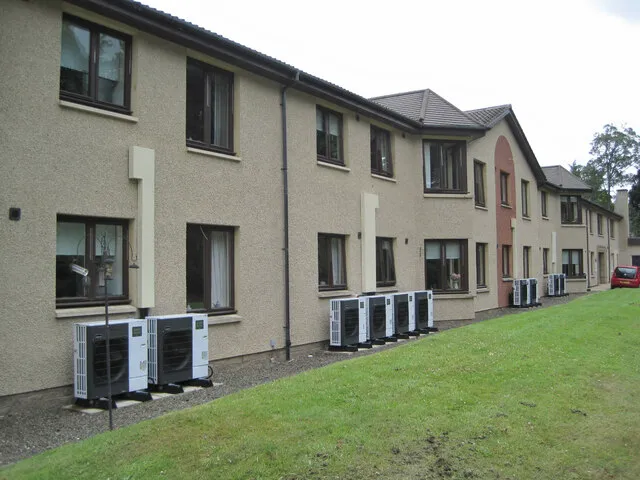
An air source heat pump is a box outside your home that soaks up warmth from the air and pumps it indoors. It uses electricity to do this, and it heats your radiators and a tank of hot water — so it does everything your boiler or storage heaters do now.
The clever part is that it moves heat rather than making it. For every unit of electricity it uses, it delivers roughly three to four units of heat into your home.
What changes at home
- Outside: a unit about the size of a large suitcase, usually in the back yard or garden.
- Inside: a hot water cylinder (many Leicester terraces will need one fitting because they have a combi boiler), a controller, and possibly a few larger radiators.
- Gone: the gas boiler, or the storage heaters.
Myths and facts
“They don’t work when it’s cold.”
Fact: they keep working well below freezing. Leicester’s winters are a little colder than the South West’s, so the system is sized for a cold day, but heat pumps heat homes reliably in Scandinavia. See heat pumps in cold weather.
”They’re only for new-build houses.”
Fact: Victorian terraces are among the most common conversions in Leicester. Shared walls on both sides actually reduce heat loss. They usually need a few bigger radiators and a cylinder. See Victorian terraces and heat pumps.
”My neighbours will hear it.”
Fact: modern units are quiet, and to fit one without planning permission the installer must show it will be no louder than 37 dB(A) at your neighbour’s nearest window. In a narrow back yard, that test decides where it goes.
”They cost a fortune to run.”
Fact: for a typical Leicester semi, a heat pump usually costs less to run than gas, and far less than storage heaters — often over £1,000 a year less. See running costs compared.
”I’ll have to pay £12,000.”
Fact: the £7,500 Boiler Upgrade Scheme grant usually brings a terrace or semi down to around £3,000–£4,000. And if your household income is under £36,000 and your home is rated EPC D to G, Leicester City Council’s Warm Homes: Local Grant may pay for it entirely.
”Someone rang offering me a free government heat pump.”
Fact: be careful. Genuine free schemes are run through the council, not cold callers. Check any installer on the MCS register. See finding a trustworthy installer.
Is it right for you?
It’s likely to suit you if you have somewhere outside for the unit, room for a cylinder, and you’re replacing gas, oil, LPG or storage heaters. A survey will confirm the details.
Next: how a heat pump works · budgeting for one in Leicester
See what a heat pump would look like in your Leicester home
The mechanism is the same in every UK home; the design is specific to yours. Our team carries out a free in-home survey including a full room-by-room heat-loss calculation, identifies the system size and configuration that fits your property, and provides a written quote with the £7,500 BUS grant already deducted.
You'll see the actual figure you'd pay — not an estimate — and the projected efficiency for your specific install.